A strikingly orange frog that fits on a pencil tip lives among the clouds in Brazil. Scientists encountered the newly named species, Brachycephalus lulai, in the cloud forests that cloak the Serra do Quiriri mountain range in the south of the country. B. lulai only measures up to a little over a half-inch long—female individuals are longer than males—making it among the tiniest four-legged creatures on the planet. The species was named after Luiz Inácio Lula da Silva, Brazil’s current president.
The international team of scientists spent years tracking down wee amphibians in the Brachycephalus genus, which live in a limited range among leaf litter in the Brazilian Atlantic Forest. Their colors vary from neon orange to more muted, green-tinged hues.

The researchers said they found this petite species thanks to its distinctive mating call, groups of two brief pulses of sound that differ from the songs of other local members of the genus. After analyzing the frog’s skeletal structure and DNA to confirm it is an undiscovered species, the researchers identified B. lulai’s closest relatives as two species that also live in the Serra do Quiriri. The frog findings were published in PLOS One.
The team proposes that B. lulai be considered a species of Least Concern of extinction, due to a lack of serious threats to the frog and the current health of its environment. And as the local climate continues to grow wetter and cloud forests grow, they noted in the paper, so do the homes of Brachycephalus species. But some members of the genus do have particularly tiny ranges and face the risk of extinction. The authors hope to promote conservation efforts to ensure the survival of B. lulai and its petite relatives.
Read more: “The Queer Lives of Frogs”
“We seek to encourage the expansion of conservation initiatives focused on the Atlantic Forest as a whole, and on Brazil’s highly endemic miniaturized frogs in particular,” they wrote in the paper.
To this end, they said they hope to create a wildlife refuge in the Serra do Quiriri area to protect B. lulai and its relatives, and ensure that the unique ecosystem is regularly monitored—helping these mini frogs continue to thrive among the clouds.
Enjoying Nautilus? Subscribe to our free newsletter.
This story was originally featured on Nautilus.
NEUESTE BEITRÄGE
- 1
 Which sandwich do you find totally delectable? !07.06.2024
 - 2Home Remodel Administrations: Change Your Residing Space06.06.2024
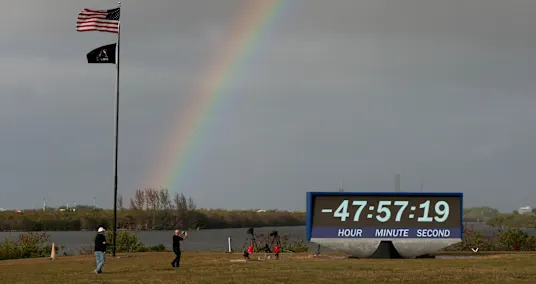
- 3Countdown begins for long-awaited Artemis II moon mission30.03.2026
- 4Israeli Chief of Staff declares new border with Gaza Strip07.12.2025
- 5A Gustav Klimt painting is now the most expensive piece of modern art sold at auction. The fascinating history behind the $236 million 'Portrait of Elisabeth Lederer.'19.11.2025




Ähnliche Artikel
- Michael Jordan donates $10M to North Carolina medical center in honor of his mother18.11.2025
- Pulsars to the extreme: Spinning dead stars found blasting radio signals from the 'edge of their magnetic reach'03.04.2026
- CDC vaccine panel votes to remove universal hepatitis B birth dose recommendation05.12.2025
- Who is Adm. Frank 'Mitch' Bradley and what does he have to do with the Venezuela boat strikes?02.12.2025
- The Main 20 Gaming Control center Ever07.07.2023
- Mom finds out she has cancer after noticing something was off while breastfeeding14.11.2025
- Judge approves Purdue Pharma’s new $7B opioid settlement with the Sacklers18.11.2025
- Ifo: Job cuts in Germany slowing but not enough for a turnaround27.03.2026
- Top 10 Arising Advances That Will Shape What's in store11.08.2023
- Watching ‘Home Alone’ with the kids this holiday season? Brace yourself for '6-7.'25.11.2025