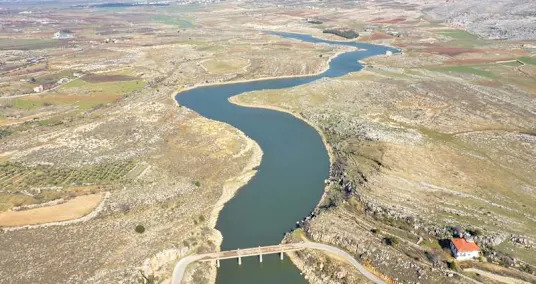
The current campaign in southern Lebanon is designed to neutralize the most immediate threats – cross-border infiltration and anti-tank missile fire – while containing long-range Hezbollah fire.
Where there are terrorists and rockets, there will be no homes and no residents, Defense Minister Israel Katz said this week, coining a pithy expression for a new Israeli security doctrine along its borders.
Katz was referring to southern Lebanon, and he said the model being followed is the one that the IDF used in Rafah and Beit Hanun in Gaza: leveling the cities and moving out the residents to establish a defensive area and push away the threat to Israeli border communities.
But there is a fundamental difference between the situation now in Lebanon and that in Gaza.
In addition to leveling Beit Hanun and Rafah and creating a buffer zone over roughly 50% of Gaza, where Israel now controls territory, Hamas retains only a limited rocket capability that it can fire at Israel. Plus, it knows that if it fires what rockets it still has, Israel will move in and hunt down both the launchers and the remaining manufacturing capabilities.
So, not only are the Israeli communities on the border safe from October 7 massacre-style penetration and anti-tank missile fire, there is no real threat – at least right now – of high-trajectory fire either.

Northern Israel's difficult situation
The same is not true in the North.
Since March 2, when Hezbollah began firing rockets at Israel in retaliation for the IAF strikes against Iran, Israel has launched a significant operation in southern Lebanon – one that has included blowing up five bridges across the Litani River to prevent Hezbollah from moving men and materiel to the southern part of the country.
Israel has demolished homes sitting close to the border – what Katz has referred to as “contact-line villages” – and has effectively removed the threat of anti-tank missile fire on Israeli communities in the North, a real danger prior to Operation Northern Arrow in 2024.
Yet Israelis in the North are continuing to suffer – not from direct fire by anti-tank missiles or snipers, but from drones and medium-range rockets being launched from north of the Litani.
That the terrorist organization has succeeded in pounding the North relentlessly for three weeks shows that an assumption Israel held – that Hezbollah was severely weakened in 2024 – was overstated.
Yes, its leadership was decapitated. Yes, much of its missile arsenal was destroyed – estimates put it at roughly 80%. Yes, its infrastructure in southern Lebanon – tunnels, storehouses, and fortified positions – was hit hard. But with what remains, Hezbollah is still able to cause Israel no small amount of harm.
So, the question Israel faces is how to remove the threat that is originating north of the Litani. Does it move ground forces north of the river? Is this 1982’s Operation Peace for Galilee all over again?
What this underscores is that the challenge Israel now faces is fundamentally different from the one it addressed in the South. This is no longer a buffer-zone problem. It is a problem of fire from deeper inside Lebanon.
Clearing territory up to the Litani can push back short-range threats and prevent infiltration. But once rockets and drones are launched from farther north, territorial control south of the Litani alone is not enough.
That, in turn, points to a broader reality: There is no clean military solution. Israel can reduce the fire – sometimes significantly – but eliminating it altogether requires more than airstrikes or even ground maneuvers.
PART OF the answer lies in sustained intelligence-driven operations north of the river – targeting launch teams, mobile systems, and storage sites. Part lies in whether the Lebanese state is willing – and able – to enforce a monopoly on arms. And part lies farther afield in disrupting the Iranian pipelines that allow Hezbollah to rearm.
Because ultimately, the rockets will continue to be fired as long as Hezbollah can rearm. If Iran is significantly weakened, that equation could begin to change.
Israel’s main strategic focus, for now, remains Iran. IAF assets, intelligence capabilities, and operational attention are still heavily directed toward Iran. The number of aircraft, pilots, and sorties Israel can sustain each day is not unlimited, and as long as the campaign against Iran continues, Israel is not bringing its full weight to bear in Lebanon. That reality shapes what is happening on the ground.
Current campaing not enough to make Northern Israel safe again
The current campaign in southern Lebanon is designed to neutralize the most immediate threats – cross-border infiltration and anti-tank missile fire – while containing, rather than eliminating, the longer-range fire now coming from deeper inside Lebanon.
But that is, as the residents in the North can attest, only a partial solution.
If and when the war with Iran ends, it is reasonable to assume that Israel will be able to shift greater attention and resources toward Lebanon. That could mean a more sustained and aggressive effort to hunt down launch capabilities north of the Litani, or even a decision to expand ground operations.
There is, however, another variable in this equation: the hope that the Lebanese government will take advantage of a weakened Iran and a weakened Hezbollah to reassert its control over the country and take real action to rein in the terrorist organization and prevent firing on Israel from its territory.
At this point in time, however, it would be unwise to pin too much on that hope.
On Tuesday, reportedly on the orders of President Joseph Aoun, Lebanon declared Iran’s ambassador persona non grata and gave him until Sunday to leave the country. Hezbollah, for its part, has signaled that the ambassador will not go.
This sets up a clear and revealing test.
If the Lebanese government – against Hezbollah’s wishes – cannot enforce the departure of a single diplomat, then it is difficult to see how it could realistically confront Hezbollah and prevent it from firing on Israel.
Conversely, if it does act, it could signal a shift, however tentative, in the balance of power inside Lebanon. That, of course, would be the most sustainable solution: not Israeli forces pushing ever deeper into Lebanon, but the Lebanese state gradually reclaiming control over its own territory.
But hoping for that to happen is not a strategy. And for Israel, the dilemma remains stark.
It can continue to contain the threat through limited ground operations, targeted strikes, and active defense – while accepting that some level of fire will continue.
Or it can escalate, expanding the campaign northward in an effort to more decisively suppress Hezbollah’s remaining capabilities – at the cost of a much wider war in Lebanon.
Katz’s formulation may define the doctrine south of the Litani. North of it, however, the choices are far less clear – and far more fateful.
NEUESTE BEITRÄGE
- 1
 Figure out How to Explore Land Close to 5G Pinnacles17.10.2023
 - 2Huge solar flare no threat to Artemis 2 astronaut launch to the moon, NASA says30.03.2026
- 3Spain breaks jobs record with 22 million Social Security contributors06.04.2026
- 47 Odd Apparatuses to Make Your Party Stick Out!19.12.2024
- 5Dave Coulier reveals he has tongue cancer, his 2nd diagnosis in a year, after beating non-Hodgkin lymphoma02.12.2025




Ähnliche Artikel
- Nordic people know how to beat the winter blues. Here's how to find light in the darkest months07.12.2025
- Astronauts on the ISS watched NASA's historic Artemis 2 launch from space03.04.2026
- The hunt for dark matter: a trivia quiz04.11.2025
- Early diagnosis leads King Charles to scale back cancer treatment in the new year12.12.2025
- How did humans evolve, and will we evolve more?22.11.2025
- I thought I knew the night sky, but what I saw from the Canary Islands left me speechless07.01.2026
- Mexico says a third of 130,000 missing people might be alive, fueling criticism from families27.03.2026
- Astronauts head home early after medical issue14.01.2026
- Vote in favor of your Favored kind of pasta06.06.2024
- Pocket-Accommodating Jeep Wrangler Buying Guide for Seniors06.11.2023