-
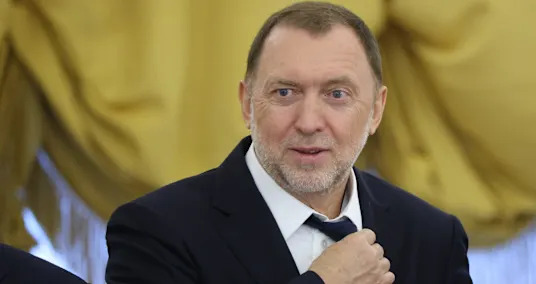
Russian tycoon Oleg Deripaska is calling for 12-hour, six-day workweeks.
-
The aluminum billionaire says longer work could help Russia speed through economic upheaval.
-
He says Russia's edge is its ability to rally and work harder in a crisis.
Russians should consider working 12-hour days, six days a week, as the country grapples with a deeper economic shift, Russian billionaire Oleg Deripaska said on Monday.
Referring to what he described as a changed global reality, Deripaska framed the country's slowing economy as more than a typical downturn driven by interest rates or monetary policy.
"This crisis is deeper. It is caused by a difficult transformation: from the global opportunities we once had to regional ones, with all sorts of restrictions," Deripaska wrote in a Telegram post.
He argued that Russia should tap into what he described as its only real resource — a "national characteristic."
"In difficult moments, we know how to pull ourselves together and work more," wrote Deripaska, the founder of Rusal, a major aluminum producer.
Longer working hours, he suggested, could help the economy adjust more quickly to changing global conditions.
"The sooner we switch to this new schedule — from 8 a.m. to 8 p.m., including Saturdays — the faster we will complete this transformation," the industrial magnate wrote.
His comments come as Russia's economy navigates a shifting landscape shaped by geopolitical tensions and changing trade flows.
Russia, a major energy exporter, has been benefiting from a surge in prices, with crude markets jolted by escalating tensions in the Middle East and disruptions to key supply routes.
Oil and gas revenues have historically accounted for more than a third of Russia's federal budget, which has been under pressure from sweeping sanctions in recent years. Official estimates showed Russia's economy grew 1% in 2025 — down sharply from 4.3% growth in 2024.
Disruptions to tanker traffic through the Strait of Hormuz — a critical global oil chokepoint — alongside a limited US sanctions waiver on some Russian shipments, have reshaped trade flows as countries scramble for supplies.
However, Deripaska had warned earlier this month that the conflict in the Middle East could weigh on global — and Russian — growth despite higher oil prices.
Benchmark crude oil futures are over 70% higher this year and trading above $100 per barrel.
Read the original article on Business Insider
NEUESTE BEITRÄGE
- 1
 New electric car registrations rise sharply in Germany in March07.04.2026
 - 2Child influencers helped power a booming industry. It's time for a reckoning.31.03.2026
- 3Satellites capture aftermath of Ethiopian volcano's 1st eruption in recorded history (images)29.11.2025
- 4What happened in 'Wicked' part 1 and will there be a 3rd movie? Recap and what Ariana Grande, Jon M. Chu have said about a sequel.18.11.2025
- 5Pfizer says patient dies after receiving hemophilia drug in trial23.12.2025



Ähnliche Artikel
- Instructions to Clean and Really focus on Your Lab Precious stone17.10.2023
- Christmas 2025 skywatching guide: What you can see in the night sky on Dec. 2525.12.2025
- Elite Execution Wall televisions for Film Darlings06.06.2024
- Astronaut on ISS captures spectacular orbital video of zodiacal light, auroras and the Pleiades10.01.2026
- A rare whale is having an encouraging season for births. Scientists warn it might still go extinct05.01.2026
- Horses really can smell our fear, new study finds14.01.2026
- Russian strikes on Ukraine kill 5 people and wound 30 more04.04.2026
- War in Iran could exacerbate German housing crisis, minister warns26.03.2026
- How stripping diversity, equity and inclusion from health care may make Americans sicker21.12.2025
- Become the best at Discussion: 6 Procedures for Progress11.08.2023